
The Salar de Uyuni is one of the most unique places in the world and is considered one of the 25 natural wonders of the planet.
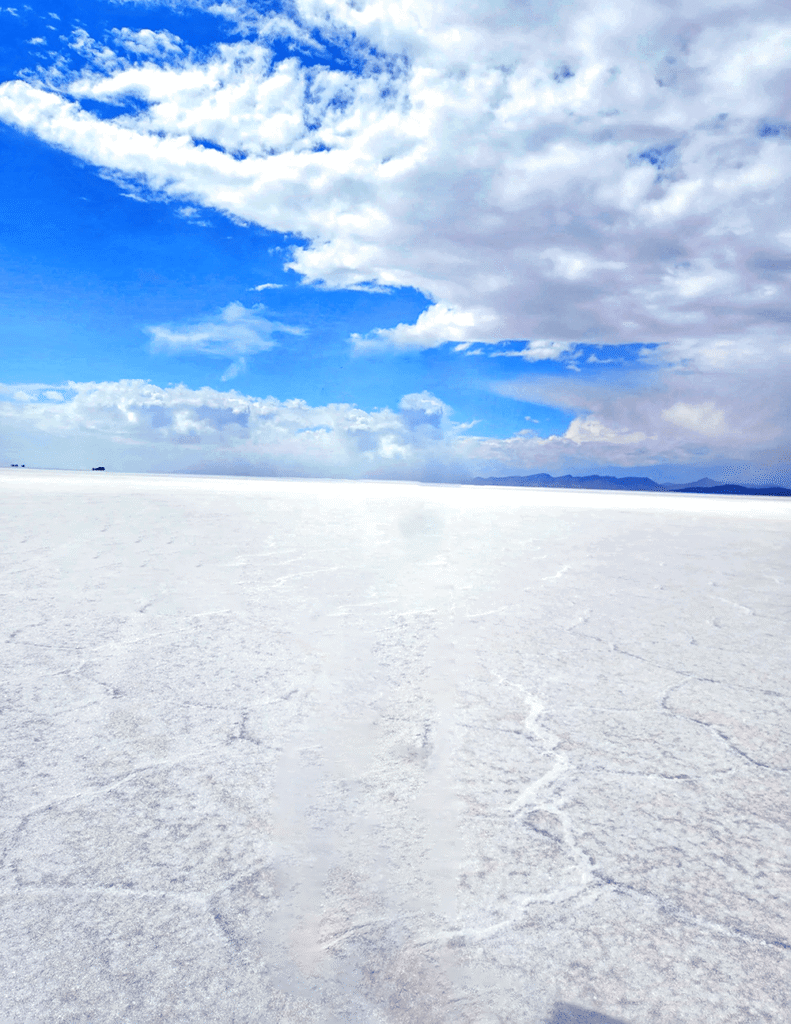
Although it is a desert made entirely of salt, this material gives it certain very particular characteristics, which we will explain below:
How was the Salar de Uyuni formed?
The existence of this great salt flat dates back thousands of years, to the Pleistocene epoch. During this time, glaciation and deglaciation occurred, and giant animals, though not dinosaurs, inhabited the earth.
During this stage, in what is now known as the Altiplano region of Bolivia (departments of La Paz, Oruro, and part of Potosí), there was a huge lake called Ballivián, covering approximately 50,000 km2.
Over time, this great lake evaporated, giving way to Lake Michín and later Lake Tauca, each smaller than the previous one but still considered immense.
- Lake Michín: 40,000 km2
- Lake Tauca: 25,000 km2
Both lakes were saline and contained large amounts of dissolved minerals, especially sodium, potassium, lithium, boron, and magnesium salts.
Naturally, Lake Tauca, like its predecessors, gradually evaporated, giving way this time to a larger number of smaller lakes and other bodies of water.
- Lake Titicaca
- Lake Poopó
- Lake Uru Uru
Being such an immense lake, when it evaporated, not only did the water disappear, but it also left behind the minerals it was composed of, which ultimately gave rise to the Uyuni and Coipasa salt flats.
Origin of the salt flat according to legend
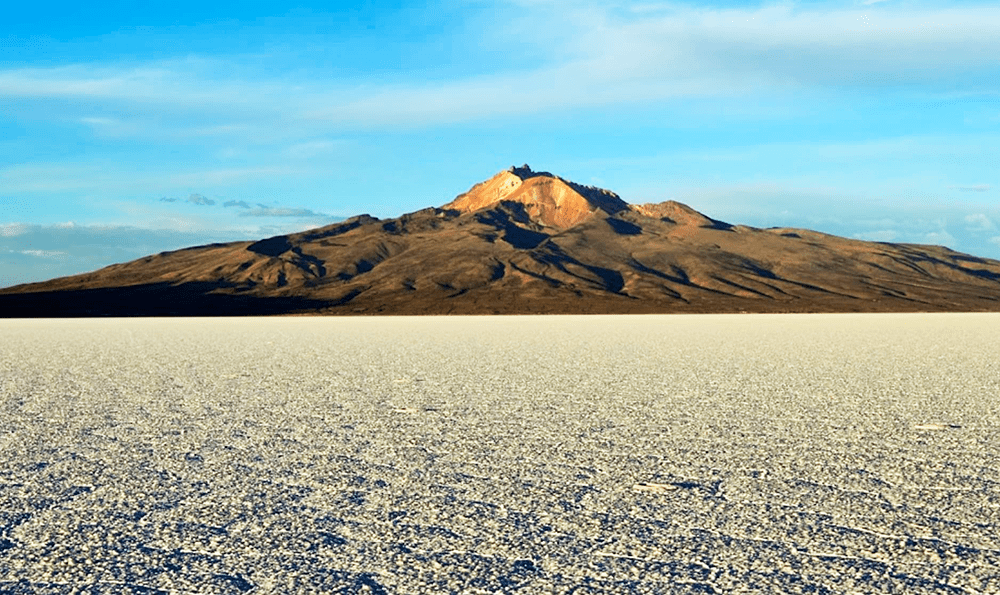
Legend has it that the volcanoes Cuzco, Cosuña, Coracora, and Chillima (the volcanoes rising to the northeast of the salt flat) were once giants who used to travel around the area to gather food for their families. On one of these trips, they met Tunupa, a beautiful local woman with whom they all fell in love. Among all the brothers, it was Cosuña who first won her heart, and as a result, a baby girl was born who was just as beautiful as her mother, if not more so.
Due to the brothers' constant jealousy of the beautiful Tunupa and their attempts to win her over, many conflicts arise, leading them to kidnap the baby and make her disappear. Tunupa is heartbroken and begins to cry. Her tears, together with the milk from her breasts, as she is unable to breastfeed her baby, begin to flow relentlessly, giving rise to the great Uyuni salt flat.
This legend is why the inhabitants of the area know the salt flat as Salar de Tunupa.
Mirror effect of the salt flat
This is the reason why this salt flat is so well known worldwide.
During the rainy season, which occurs from January to March, the water that accumulates on the surface of the salt flat creates a mirror effect, reflecting the sky and the rest of the landscape, making it a unique sight in the world and a dream setting for photos.

Water eyes
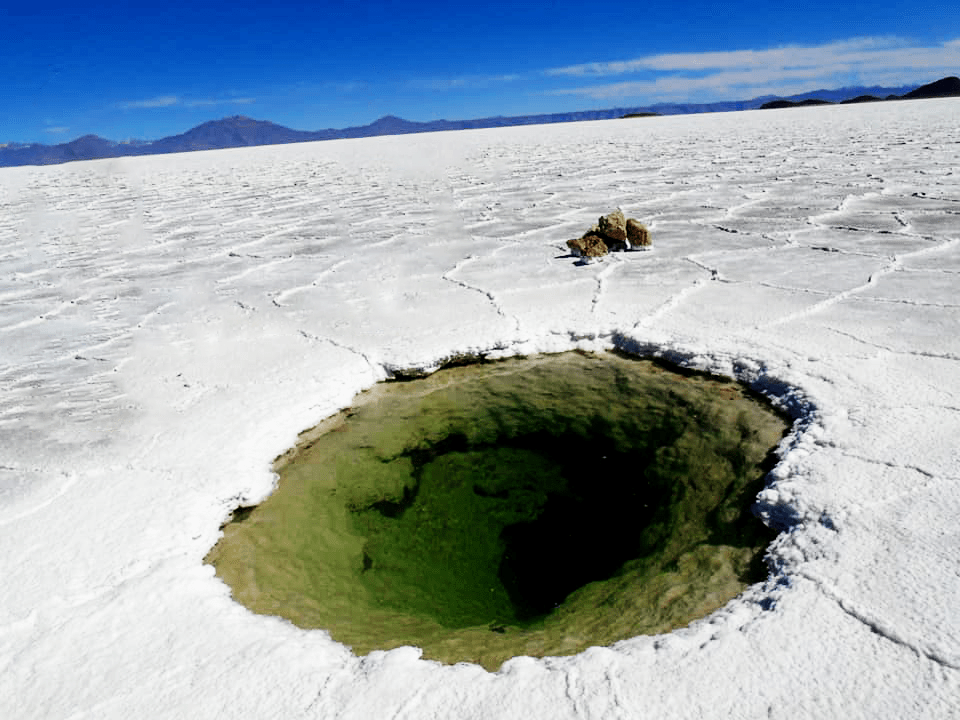
These water “eyes” are small circular pools or openings that break the solid salt surface and expose the water that seeps from below.
This happens because water accumulates under the salt layer, either from rain or melted snow that finds its way from the Andes. This water accumulates over time until the pressure causes the surface to “break.”
These water eyes can be superficial or even reach several meters deep. However, these water eyes are a good sign as they could indicate areas rich in lithium, particularly in that area.
Lithium reserves
The Salar de Uyuni is one of the largest lithium reserves, containing between 50% and 70% of the world's lithium, which translates into around 20 metric tons of lithium. This data is particularly relevant today due to the growing demand for this mineral for the manufacture of various electronic devices.
Currently, there are many factors slowing down this industrialization process, mainly because Bolivia lags behind other countries in terms of extraction technology.
However, despite the obstacles that may exist, Bolivia has achieved an annual extraction of 2,300 tons of lithium with its own resources, and this figure is on the rise.
Salar de Uyuni at night
As the Salar de Uyuni is practically a salt desert, due to the absence of cities in a vast expanse of territory and the presence of nothing but salt, there is no light pollution, allowing us to contemplate the night sky in all its splendor, especially on clear nights when there are no clouds in the sky. These skies occur during the dry season in the area, from May to November.

Salt flat’s Altitude
The salt flat is located at an altitude of 3,660 meters above sea level, making it the highest salt flat in the world. Due to this altitude, temperatures vary dramatically, making the sun very intense during the day and the nights extremely cold.
Tourists are advised to acclimatize gradually to avoid discomfort or altitude sickness.
Salt flat's depth
The salt flat is estimated to be 120 meters deep and contains around 10 billion tons of salt.
However, the same type of salt is not found at the entire depth; rather, the entire desert is composed of layers distributed over 120 meters.
The first layer is the surface layer, which ranges from 20 cm to 2 meters, depending on the area. It is made up of common salt and is the layer where the hexagonal polygons are formed.
The second layer contains denser and more porous salt, which is the salt that supports the weight of vehicles.
The third layer is deeper and is composed not only of salt but also of other minerals such as gypsum, and the last layer is made up of brine, which is a liquid salt that reaches meters and meters in depth.
It is in this layer that lithium, magnesium, and other minerals are found.
Geometric patterns
During the dry season, which lasts from April to December, the water that causes the “mirror effect” evaporates due to intense heat and low humidity.
The water evaporates and the salt shrinks. The salt layer in the desert shrinks as it dehydrates, and to release this tension, it cracks like clay, although something much more interesting happens with salt.
In the desert, the salt cracks in such a way that it forms an almost perfect pattern. This happens because the salt layer is extensive and, as it shrinks during dry periods, it cracks evenly across the desert. The hexagonal shape that forms is the one that naturally best distributes the forces and cracks without leaving gaps. It is a principle that obeys nature, the same one by which bees build their honeycombs with hexagonal patterns.

The Salar de Uyuni is a very unique place in the world, not only because of its immensity and beauty, but also because of the series of natural, historical, and cultural phenomena that make it a captivating site. From its perfect mirrors that defy perception to the lithium reserves hidden beneath its surface, each feature reveals a different facet of this extraordinary landscape.
Together, all these characteristics remind us of the importance of preserving this natural treasure, whose magic continues to amaze travelers, scientists, and local communities alike.